Scan QR code to download the
application.
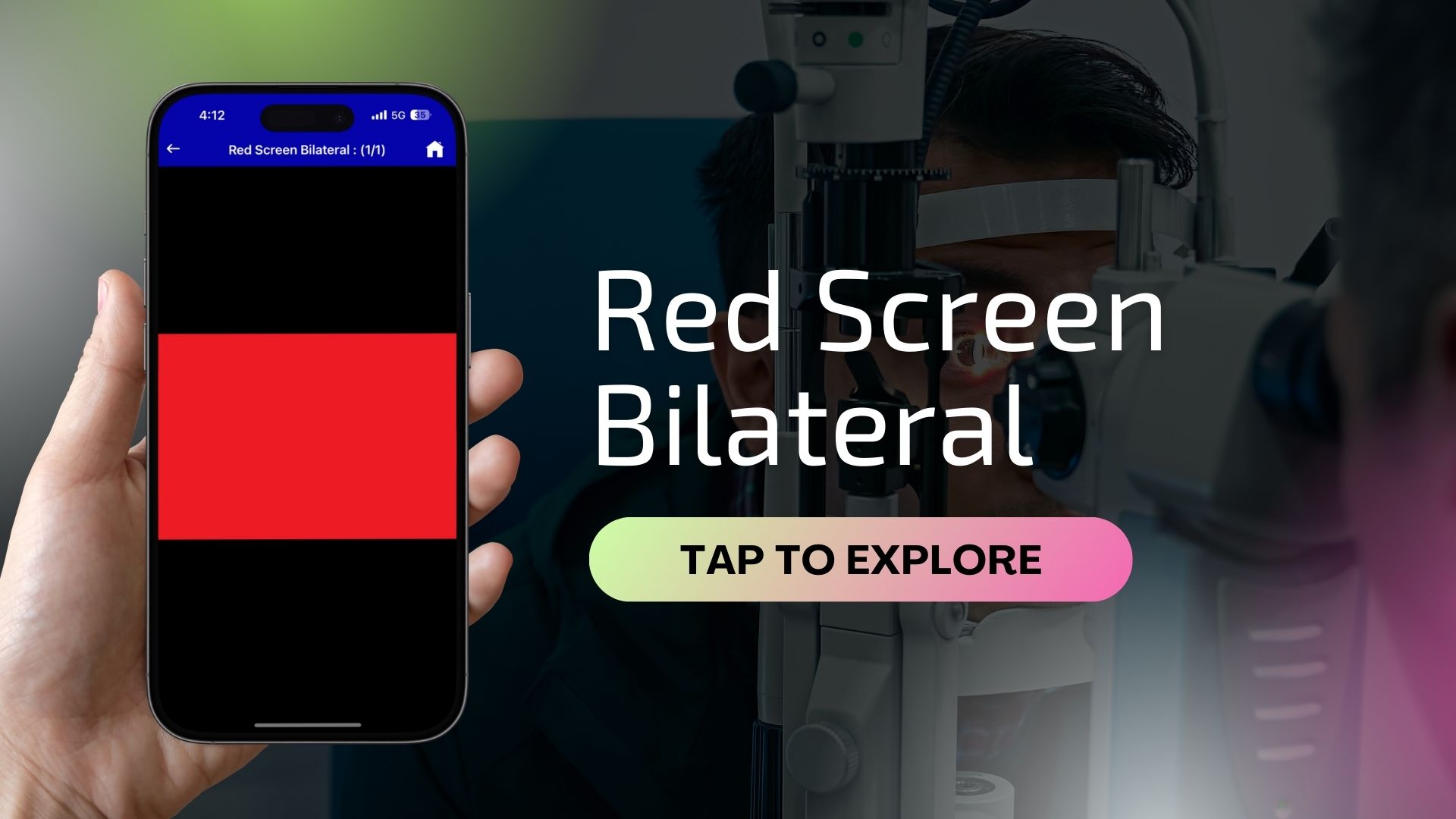
Red Screen Bilateral Test
The red screen bilateral test is a commonly used visual
assessment designed to evaluate how well both eyes work
together, focusing on binocular vision. It is particularly
valuable in pediatric ophthalmology, where it plays a key
role in diagnosing and managing eye conditions in children.
Specifically, it helps identify issues such as strabismus,
which is the misalignment of the eyes, and amblyopia, also
known as lazy eye. By assessing the coordination between the
eyes, the test provides crucial information about visual
function. Below is an overview of the test and the procedure
involved.
Purpose of the Test
- Assess Binocular
Vision: Evaluate the
coordination and alignment of both eyes.
- Diagnose Strabismus:
Identify any
misalignment of the eyes.
- Evaluate Amblyopia: Determine if there
is a significant difference in visual acuity between the
two eyes.
Setup
- Environment: The test should be
conducted in a well-lit, distraction-free environment to
ensure the child can focus on the test without
interruptions.
- Equipment: The main tool used is a red
screen or card, which features:
- Red Screen: A screen or card with
a red
background or red shapes.
- Neutral Background: Typically a white or
neutral-colored background to provide contrast
with the red screen.
Procedure
1. Introduction:
Explain the test to the child in simple terms, emphasizing
that they need to look at the red screen or shapes and
follow the instructions provided.
2. Testing Steps:
- Cover Test: The
examiner covers one eye
at a time while the child focuses on the red screen.
This helps assess eye alignment and movement.
- Red Screen Observation: With the child
looking at the red screen, the examiner observes the
movement and alignment of both eyes. The red screen
helps to highlight any misalignment or discrepancies in
how the eyes work together.
3. Observation Criteria:
- Eye Alignment: Look
for any deviation
or misalignment when one eye is covered.
- Binocular Coordination: Assess how well
the eyes work together while focusing on the red screen.
Any abnormal responses can indicate issues with
binocular vision or amblyopia.
Evaluation
- Normal Results: Both
eyes are aligned
correctly and work together without significant
deviation or visual acuity differences.
- Abnormal Results: Signs of
misalignment, poor coordination between the eyes, or
differences in visual acuity may suggest conditions such
as strabismus or amblyopia.
Follow-Up
- Referral: If
abnormalities are
detected, the child may need to be referred to a
pediatric ophthalmologist or another specialist for
further evaluation and management.
- Additional Testing: Further assessments
may be required to confirm the diagnosis and develop an
appropriate treatment plan.
The red screen bilateral test is a valuable tool in pediatric
eye care, providing essential insights into binocular vision
and helping to identify visual issues that may require
intervention.