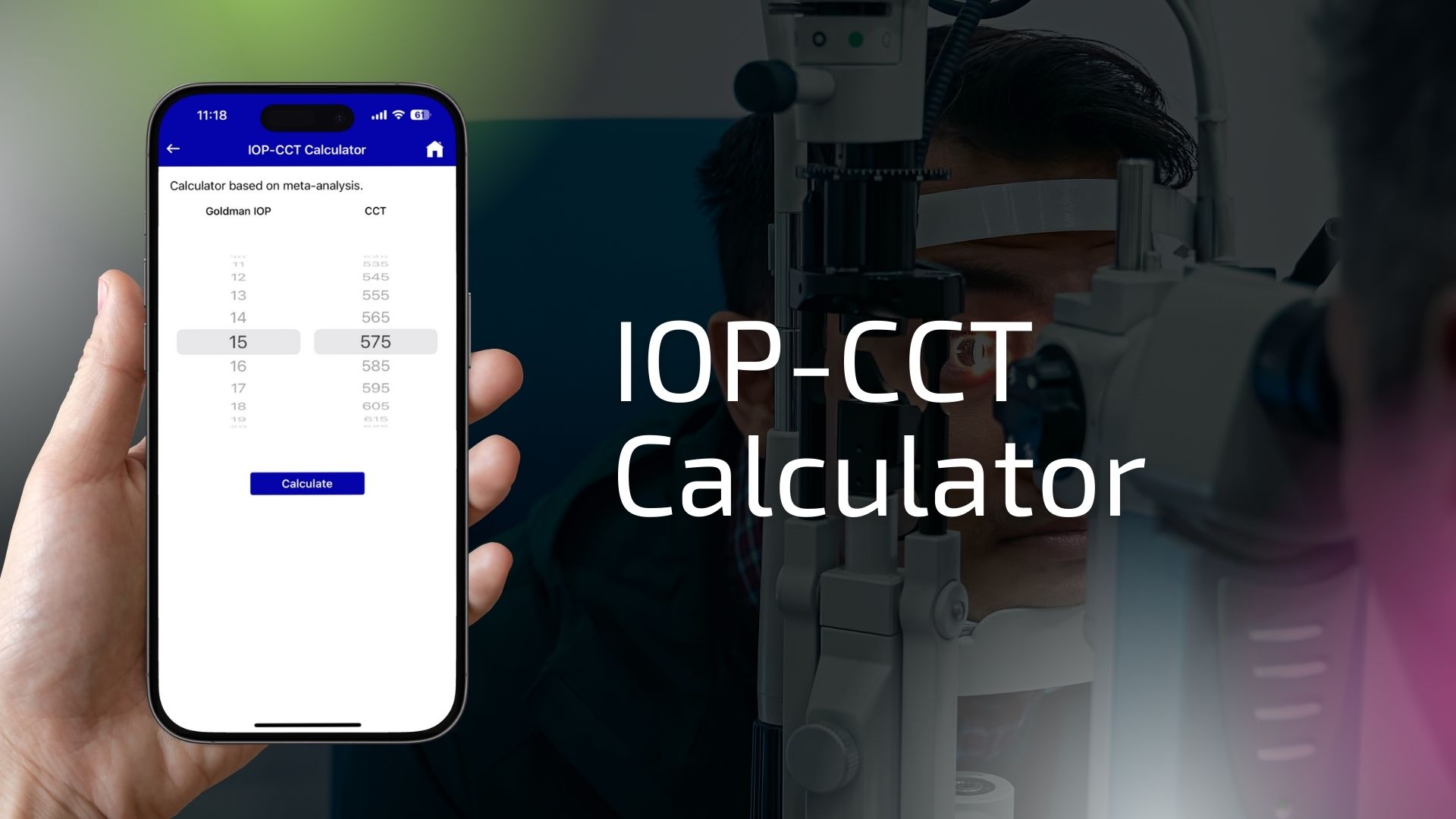
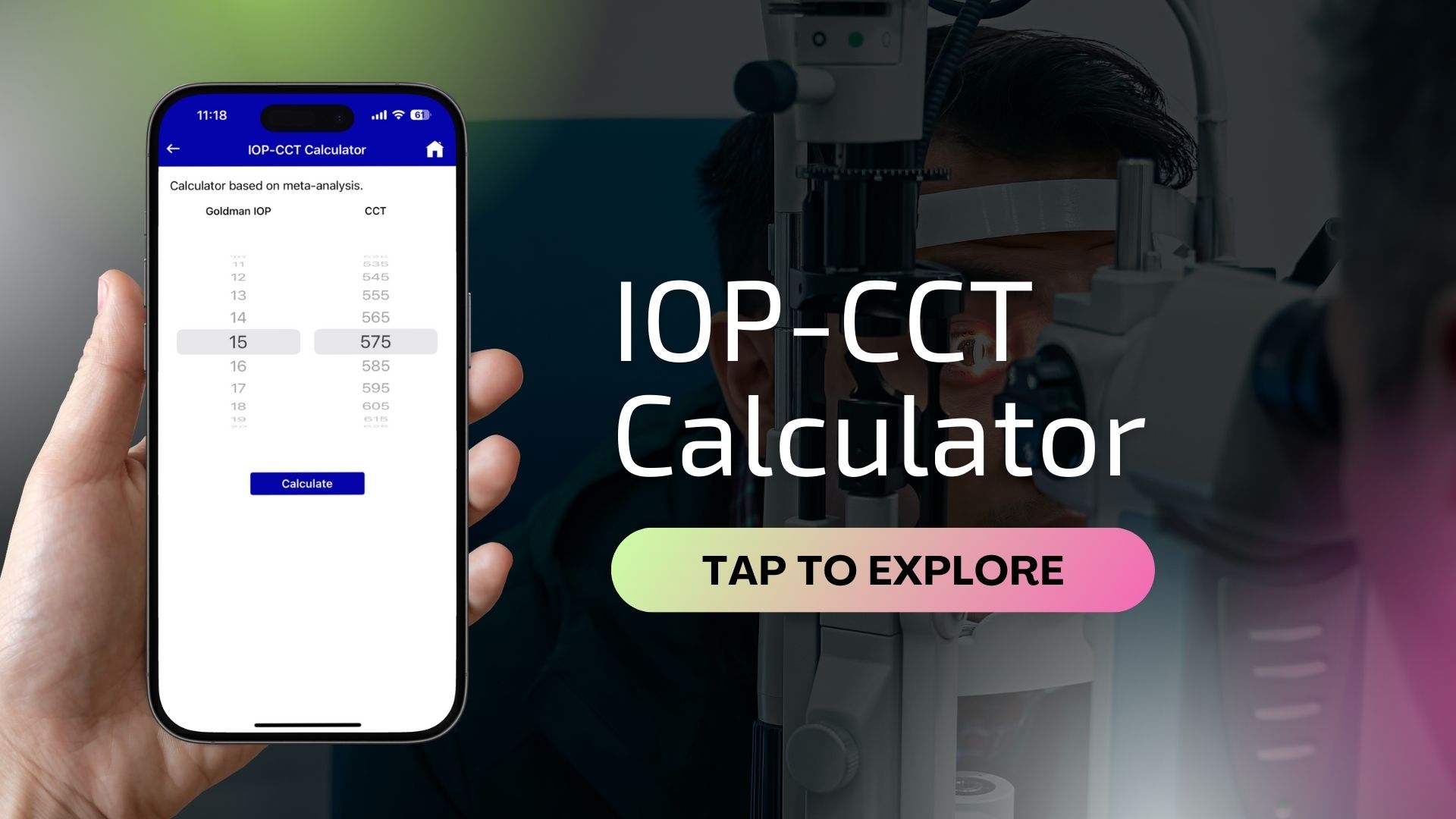
The IOP-CCT Calculator, Goldman IOP, and CCT are terms related to Intraocular Pressure (IOP) measurement, which is a critical component in the diagnosis and management of glaucoma. Here's a breakdown of each:
The IOP-CCT (Intraocular Pressure – Central Corneal Thickness) Calculator is used to estimate the corrected intraocular pressure based on the central corneal thickness (CCT). Since corneal thickness can influence the measurement of IOP, the IOP-CCT calculator is essential for more accurate assessment. Thin corneas may lead to an underestimation of IOP, and thick corneas might result in overestimation. The calculation adjusts for these variations, ensuring a more reliable IOP measurement.
The IOP is adjusted based on a specific correction factor depending on the CCT. A common rule of thumb is that for every 10 micrometers change in CCT, the IOP should be adjusted by 1 mmHg.
Adjusted IOP = Measured IOP + (0.007 × (CCT - 520))
Here, 520 micrometers is considered the average CCT, and the correction factor is 0.007.
The Goldman Applanation Tonometry (GAT) is the gold standard for measuring intraocular pressure. It works by flattening a small area of the cornea using a small, calibrated probe and measuring the force required to flatten that area. The Goldman IOP is typically measured in millimeters of mercury (mmHg) and provides a direct estimate of the pressure inside the eye, which is critical for glaucoma diagnosis and management.
A topical anesthetic is applied to the eye, followed by the use of a slit-lamp microscope and the tonometer probe to measure the force required to flatten a small area of the cornea. The reading is recorded in mmHg.
It is the most widely used and reliable method for IOP measurement in clinical settings, especially when assessing glaucoma or the risk of glaucoma.
CCT refers to the thickness of the central part of the cornea, measured in micrometers (µm). Central corneal thickness can influence the accuracy of IOP measurements. A thinner cornea can cause an underestimation of the true IOP, and a thicker cornea can lead to an overestimation.
CCT is typically measured using an ultrasonic pachymeter or optical coherence tomography (OCT).
The normal CCT range is generally between 520-550 micrometers, although there can be individual variations.
A thinner CCT is associated with an increased risk of glaucoma, while a thicker CCT may lead to higher IOP readings that don’t necessarily reflect a higher risk of glaucoma.
Goldman IOP is the baseline measurement for IOP, but it can be influenced by the CCT.
To ensure accurate glaucoma diagnosis and management, it's important to correct IOP measurements based on CCT using the IOP-CCT Calculator.
The IOP-CCT Calculator takes into account the variations in corneal thickness, giving a more accurate assessment of intraocular pressure and aiding in better glaucoma management.
Adjusting IOP based on CCT values ensures that patients with thinner or thicker corneas are not misdiagnosed with false high or low IOP readings.
Understanding the corrected IOP can help clinicians make better decisions regarding the initiation of treatment, monitoring of glaucoma, or adjusting therapy.