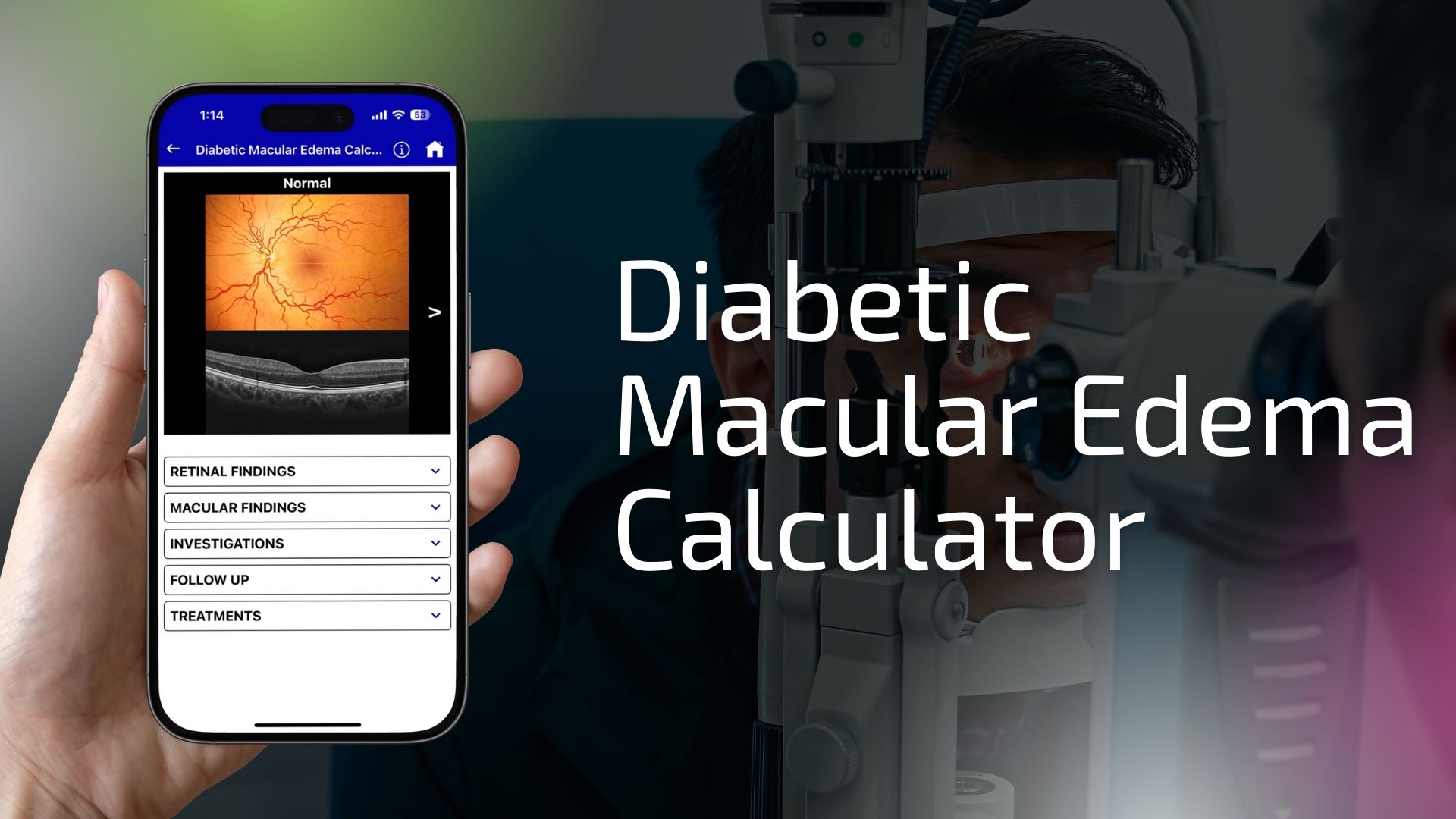
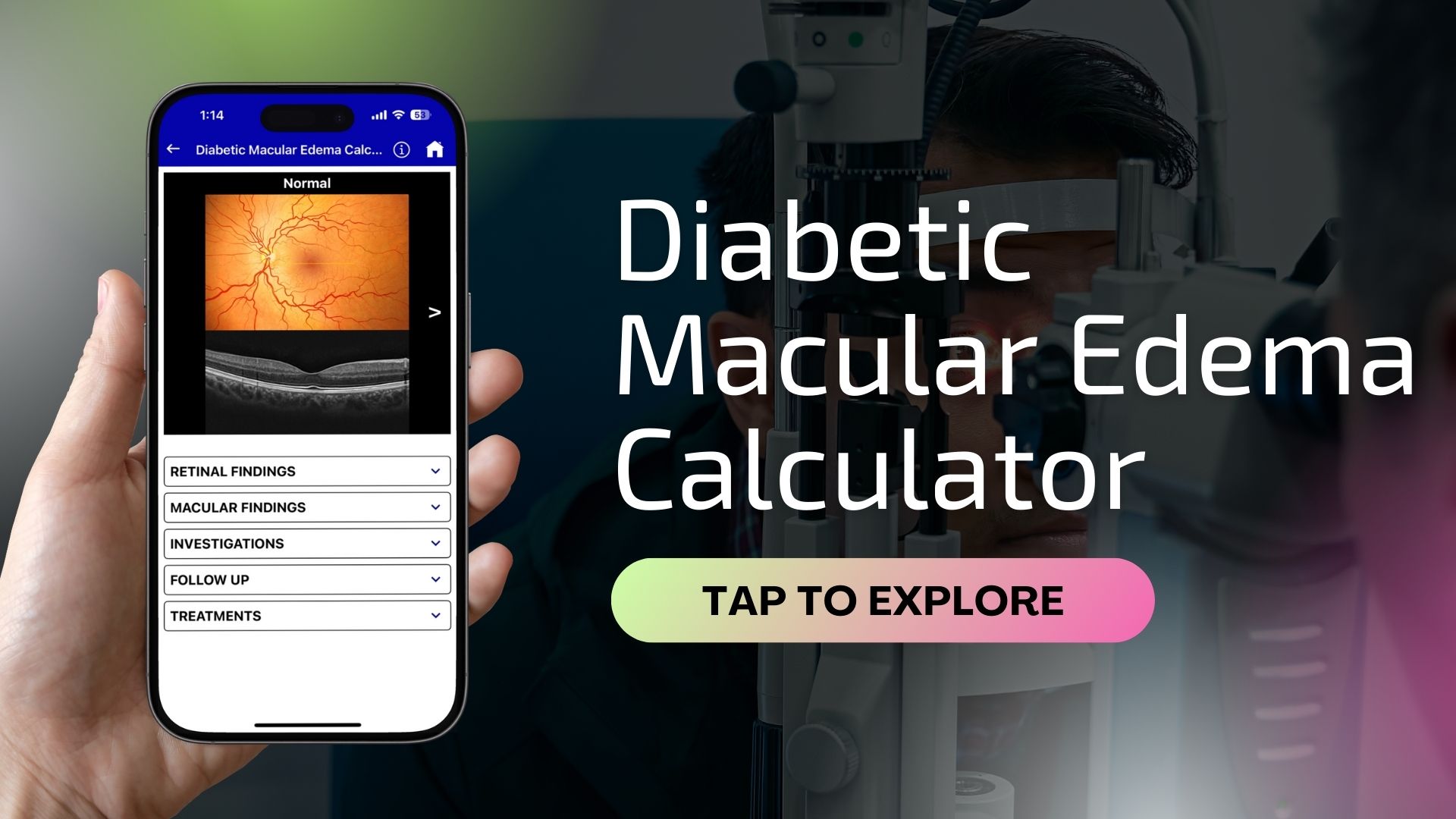
Diabetic Macular Edema (DME) is a sight-threatening condition that arises as a complication of diabetic retinopathy. It occurs when chronic high blood sugar levels damage the blood vessels in the retina, leading to leakage of fluid into the macula — the part of the retina responsible for sharp, central vision. As fluid accumulates, it causes the macula to swell, resulting in blurry or distorted vision that can significantly impair daily functioning.
DME can develop at any stage of diabetic retinopathy and is one of the most common causes of vision loss among people with diabetes. Early identification and timely treatment are key to preventing irreversible vision damage.
The DME Calculator is designed to help healthcare providers and patients assess the likelihood or severity of Diabetic Macular Edema using key clinical variables. By integrating systemic and ocular risk factors — such as glycemic control, blood pressure, visual acuity, and retinal imaging findings — this tool supports more informed decisions about screening, referral, and treatment planning.
For patients, the calculator can offer a better understanding of their current eye health and help prompt earlier engagement with eye care services. For providers, it can aid in identifying high-risk individuals who may benefit from further retinal evaluation or intervention.
The calculator works by analyzing a combination of patient data and clinical observations:
After entering the required values, the calculator provides: