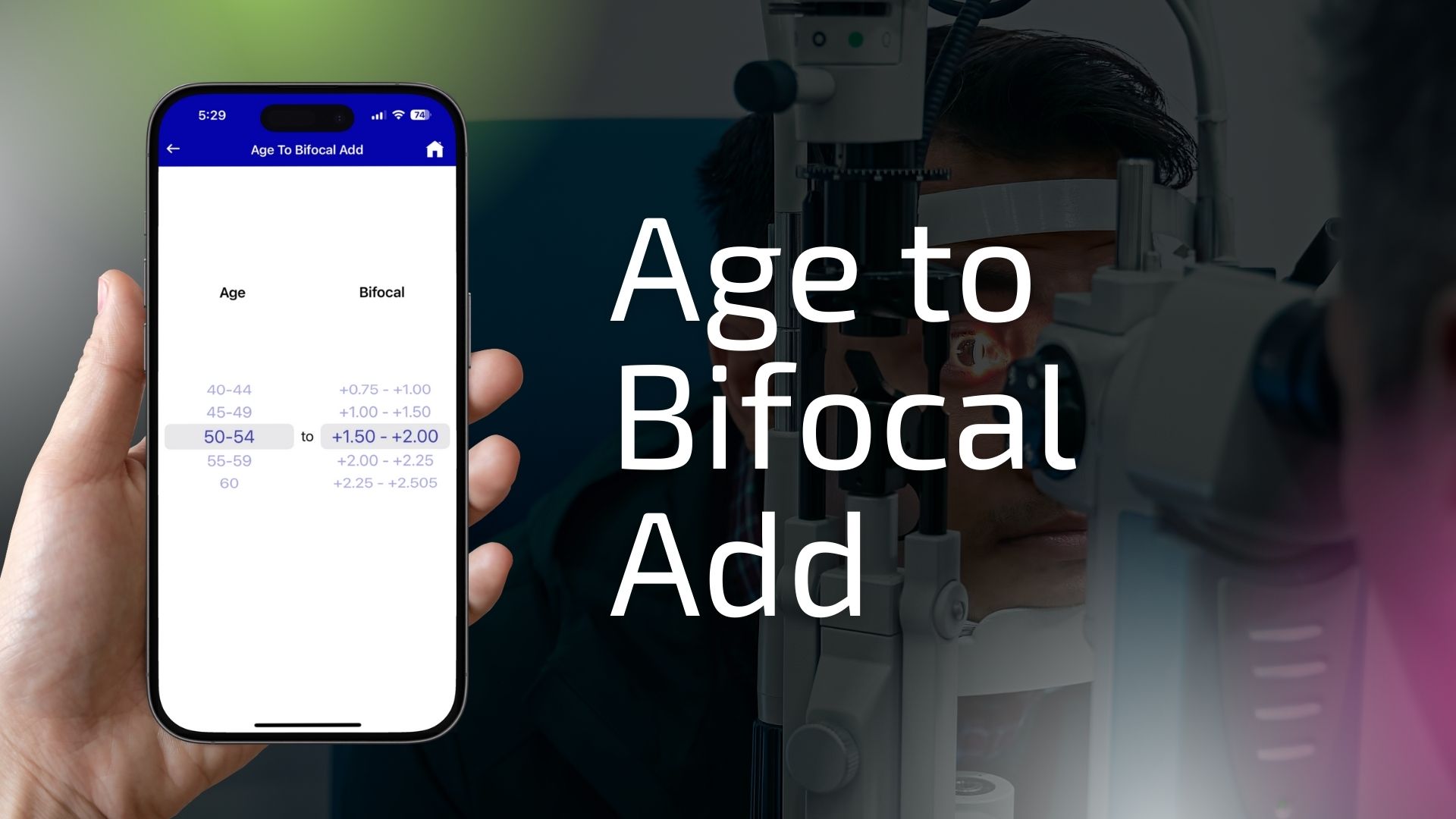
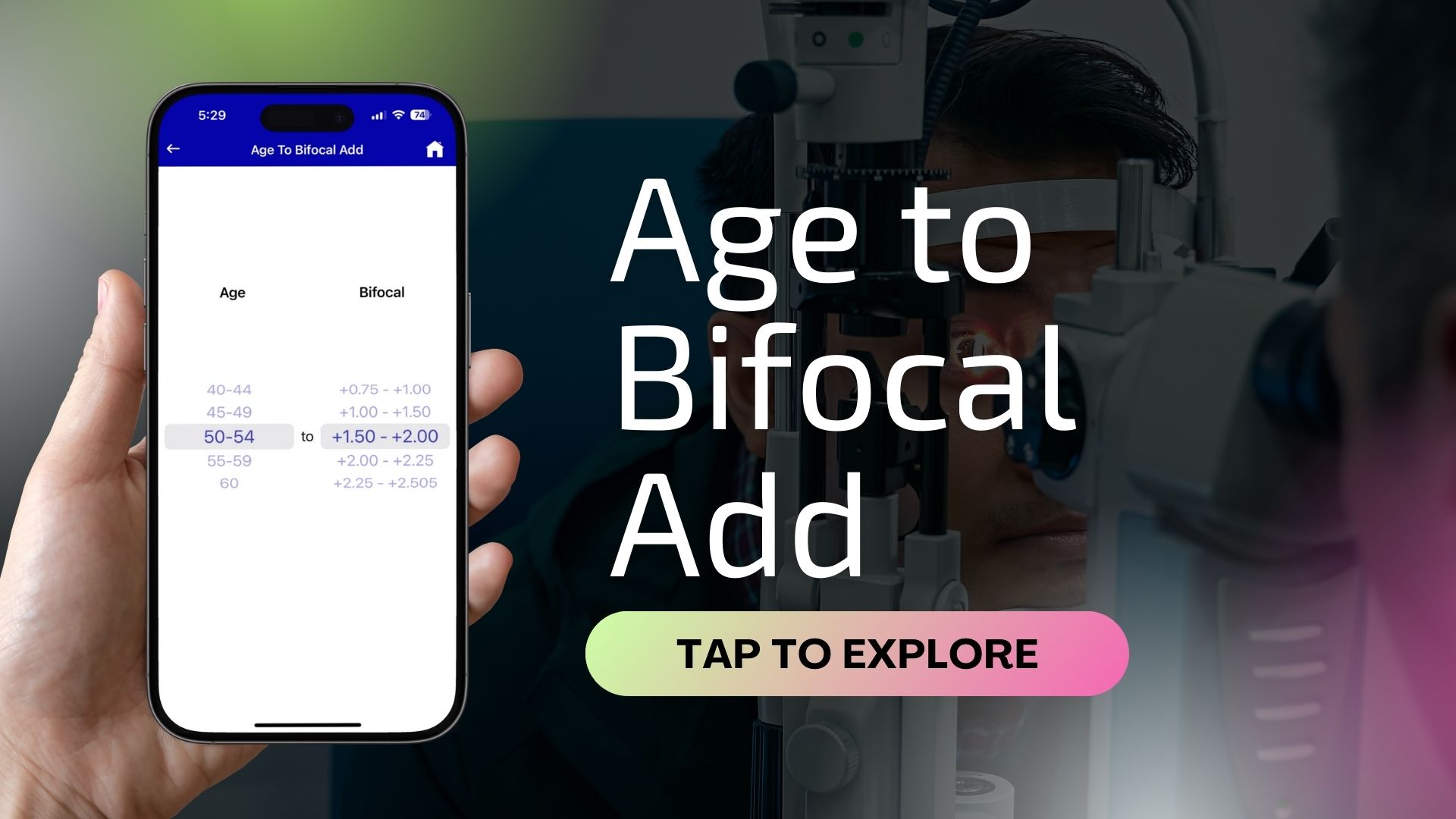
The bifocal add, or “near add,” is extra lens power added to a distance prescription to aid in close-up vision. It’s prescribed when the eyes can no longer focus well up close, mainly due to presbyopia. Presbyopia is an age-related condition that reduces the eye’s ability to accommodate. The bifocal add helps reduce eyestrain and blurred vision during near tasks. It is commonly used for reading, computer work, and other close-up activities. This additional lens power allows individuals to seamlessly transition between seeing at a distance and close range. Eye care professionals determine the strength of the near add based on the individual’s specific needs. The bifocal add significantly improves comfort and visual clarity for those with diminished near vision.
Presbyopia typically starts around age 40 and progresses into the early 60s. The crystalline lens becomes stiffer with age, making it harder to change shape and focus on near objects.
Here is a general guide to expected bifocal add power by age:
| Age Range | Typical Add Power |
|---|---|
| 40–45 | +0.75 to +1.25 D |
| 46–50 | +1.25 to +1.75 D |
| 51–55 | +1.75 to +2.25 D |
| 56–60+ | +2.25 to +2.50 D |
| Age | Common Symptoms | Typical Add Range | Notes |
|---|---|---|---|
| 38–42 | Slight blur when reading | +0.75 to +1.00 D | Often first prescription for reading or computer work |
| 43–47 | Need for brighter light, fatigue | +1.00 to +1.50 D | Frequent reading difficulty, early bifocal use begins |
| 48–52 | Clear distance vision but near is blurry | +1.50 to +2.00 D | Add strength increases steadily |
| 53–60+ | Near tasks very difficult without correction | +2.00 to +2.50 D | Add stabilizes; full presbyopia reached |